If the Suit Fits (It’s Probably Custom)
Part 1: The Coat
Fred Astaire famously danced around Anderson & Sheppard’s fitting room before taking delivery of a new suit, stopping suddenly every few beats to confirm that the collar lay as it should. While such heroic measures might not be necessary for the rest of us, an educated eye and sensibility is critical when appraising the fit of tailored clothing — not only for the tailor, of course, but also for his client, and — perhaps most of all — for the man who might not yet be buying custom but would like to know why it’s worth it. To that end, the following article covers what I see as the most important elements of a well-fitting suit jacket or sportcoat (I’ll deal with trousers in a later installment).
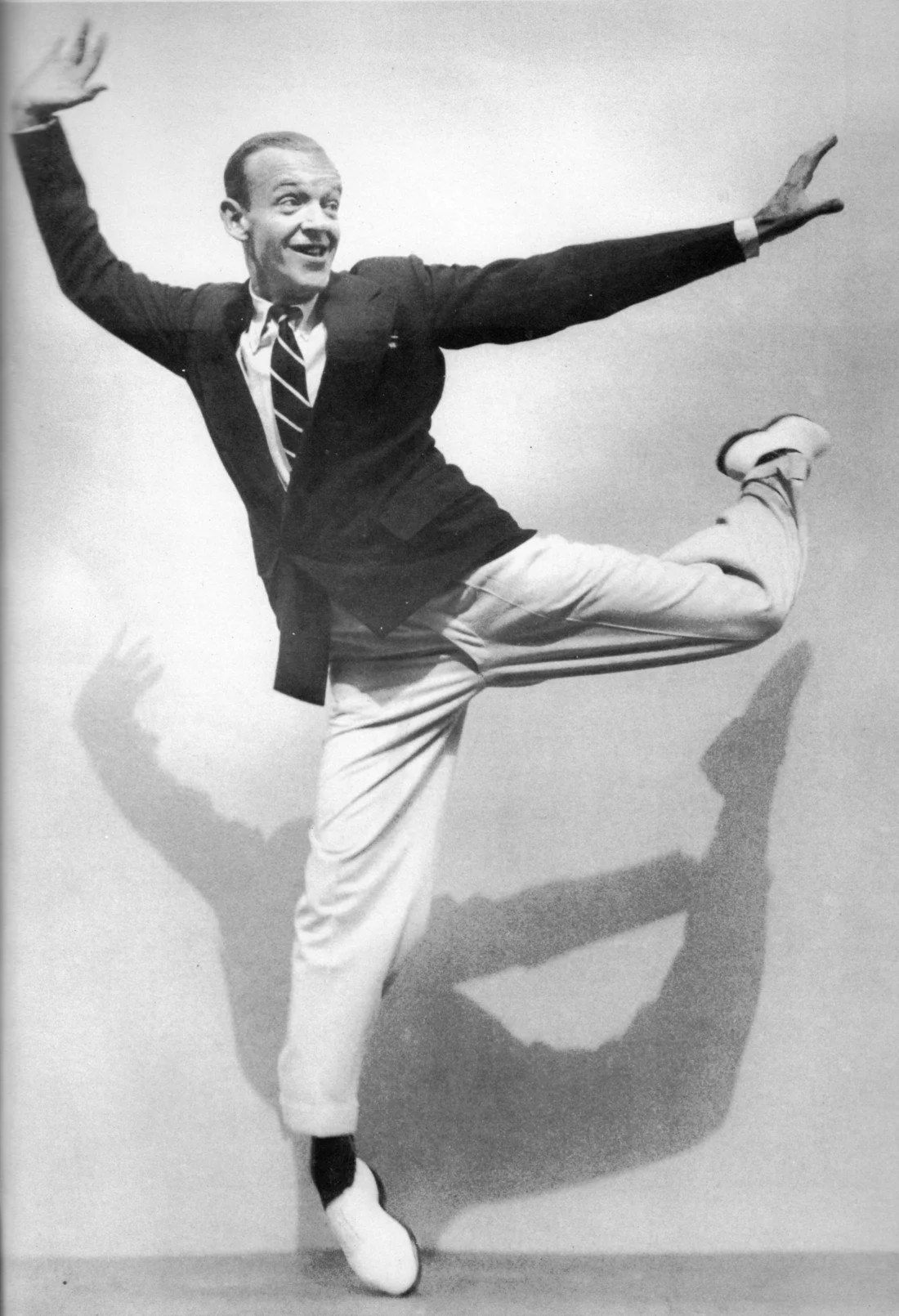
I should say that my notion of good fit might not be everyone’s. Like Astaire, I believe that an essential element of custom fit is comfort: clothes made for a specific body should have sufficient fullness in repose to accommodate that body in a full range of motion. I realize that this isn’t exactly the current RTW trend, and I appreciate that new stretch fabrics may be changing the custom tailoring game in ways I’m not yet familiar with, but I’ve tried to keep the points below applicable to any well-made custom suit, regardless of cut. Individual clients may happily choose to sacrifice comfort for style, but I’d at least like them to know what they’re missing.
Starting from the top, the collar of a suit coat or sport jacket is its single most important element — and far too often, one of its most obvious failings. A poorly fitting collar — one either pulling away from the shirt collar or bunching up underneath it — is glaringly evident even when no other aspect of one’s attire is visible (e.g. a close-up portrait, seated across a table, on television). Even to the untrained eye which might not isolate and identify it as a problem, the overall effect of a poorly fitting collar is distracting, disassociating the garment from the wearer when it should be constructing a seamlessly elegant impression. A properly fitted collar should literally grip the neck — not uncomfortably, but perceptibly, reassuringly: “I got you.” It should show about a half-inch of shirt collar in back (analogous to the half-inch of shirt cuff that should be shown at the sleeve), and smoothly transition to the lapels without bowing out over the wearer’s clavicles. Most challengingly, it should do all this whatever the wearer’s movement or position. To accomplish any of this, the collar should ideally be made by hand, and at least set into the coat by hand, as only a good tailor’s skilled and experienced hands can build in all the compound curves necessary for a precise fit.
After the collar, the next most prominent fit point in a coat are the shoulders. There are of course a variety of shoulder silhouettes (e.g. natural, pagoda) that signify personal style rather than proper fit, but what they should all have in common is alignment with the natural angle of the wearer’s shoulders. A coat with insufficiently squared shoulders for a given wearer will produce a taut roll below the back collar. Conversely, a wearer’s sloped shoulders should be reflected in his coat or else the coat’s shoulders will collapse, causing diagonal wrinkles to radiate from the armpit toward the neckpoint. Many tailors once “fixed” sloping shoulders with shoulder pads to achieve a squarer and more constructed ideal, but today, men seeking a more natural, soft, and unconstructed look are embracing their sloped shoulders, finding defect only in coats not cut to accommodate them. As with collars, adjusting shoulder slope is far beyond the skill level of most alterations tailors, and is usually only seen as part of a custom process.
Sleeve crown construction is another matter of personal taste (e.g. Ivy League natural, English roped, Neapolitan spalla camicia “shirtsleeve”); what’s important in terms of fit is that the attachment of the sleeves, whatever the technique, be done by hand. The primary reason for this is that the circumference of the sleeve head should always exceed that of the armhole (or “scye”) on the jacket by at least a couple inches to afford freedom of movement for the bicep, and the distributive fulling of this excess material can only be properly done by hand. This larger bicep should taper gradually to the cuffs, where excess fabric serves no purpose and looks sloppy. All you want here is enough room for your bulkiest shirt cuff (probably a French/double cuff) to slide without constriction (a good rule of thumb is that no one should be able to see your sleeve lining). It’s a small detail, but one immediately noticeable on a good custom suit, and at least as important as working sleeve buttonholes.
Returning to the torso, at approximately armpit altitude, a variety of factors become critical to a good and comfortable fit. The first is the armpit altitude itself: it should be as high as possible without being uncomfortable. While this might take some getting used to for man accustomed to the large, low armholes RTW manufacturers put in to accommodate a variety of body types, the benefits will be apparent the moment he tries to hail a cab and finds he can actually can do so without pulling the entire coat off his body. The equally important fore and aft axis of arm movement (a very common point of constriction in RTW) is a function of two factors: the aforementioned upper sleeve fullness, and a certain amount of fullness built into the chest and across the back blades — i.e. “drape.”
A word on drape is in order here. The term is a bit controversial as it refers not only to this fullness in the upper torso of a well-cut coat, or the way cloth falls in a garment more generally, but also to a specific cut of coat that has been sharply dividing opinion for almost a century. First developed in the 1930s by the Prince of Wales’ tailor Frederick Scholte after he’d observed the manner in which British guardsmen’s belted greatcoats created a powerful V-shaped silhouette, the classic “drape cut” deploys a slightly extended shoulder and substantial fullness over the chest and blades that tapers at the waist to create a similarly masculine effect. The excess material tends to fall, like drapery, in soft vertical ripples in front and back from the shoulder. This fullness also has the happy consequence of virtually unrestricted arm movement — a feature well suited to the more casual context of what was in the 1930s still being called a “lounge” suit.
The drape cut was a radical departure from the more narrowly cut morning and frock coats of the Victorian and Edwardian eras, and with the universally adored Prince as its ambassador, its popularity grew throughout the 1930s. As so often happens with trends, the features of the drape became exaggerated as it became more widely adopted, and by the late 1950s, its now unbalanced proportions were ripe for replacement by sleeker, more modern looks. The drape cut has enjoyed periodic popular revivals — notably in the 1980s and 90s — but it is best understood today not as a pole of fashion extremity but as an subtle element of sartorial sophistication that has never left the wardrobes of many well-dressed men for the simple reason that it looks and feels comfortable. All of this is not to say that a trimmer, or “cleaner” chest lacking visually apparent drape can’t also be well-fitted and elegant — indeed, many sartorial authorities have long derided what they see as the drape cut’s inherent sloppiness — but it’s probably safe to say that the ultra-fitted look currently in vogue comes at the expense of movement and comfort that will limit its long-term appeal and wearability.
Regardless of whether you prefer a clean or a draped chest, there is only one proper way for lapels to lay on the chest, and that is smoothly, with a voluptuous roll built into the cloth with every pad-stitch. Breaking or gaping lapels — again, epidemic in this era of shrunken proportions — are a sure sign of poor fit. The width and shape of any given coat’s lapels are more a matter of personal style; although conventional tailoring wisdom suggests a moderate width in harmony with the wearer’s shoulder and face width, a confidently stylish wearer can generally pull off whatever strikes his fancy.
Descending down the torso, the next fit point we come to is the coat waist. The exact placement of a coat’s buttoning point is too often subject to questionable trends. The current vogue is for a high buttoning point (approximately over the sternum) that shortens the torso and shows an inelegant triangle of shirt below the button and above the trousers. Previous trends put the buttoning point too low, elongating the torso and making it difficult to sit with the coat buttoned. On a custom suit, the buttoning point should generally be at or just slightly above the natural waist. This is the body’s center of gravity, and a button placed here serves as a fulcrum for the coat to move most naturally with the wearer in all positions without the need to be unbuttoned. A coat waist thus defined is mutually complemented by trousers worn on the natural waist — an elegant combination which comfortably eliminates that awkward triangle of shirt.
The exact tightness of the coat waist is less a matter of trend than taste. Personally, I don’t mind there being a small amount of visible “pull” on the button to more sharply define the waist (as former Anderson & Sheppard cutter Tom Mahon once noted, “you want that button to be doing something”), but many prefer a cleaner closing of undisturbed cloth. What is critical is that the waist be fitted enough to at least suggest a waist — even if the wearer lacks one — without actually constricting the belly. This is especially important at the small of the back, where a slight scoop can do much to offset a paunch in front.
Next comes the skirt of the coat, which on custom clothing should be both precisely the right length for any given client and the right shape. The latter is nothing more or less than proper tailoring, but on many RTW garments, the front “quarters” below the buttoning point can bow out convexly because the garments have been constructed flat rather than having their necessary curves — in this instance, a concavity over the front hips — built into the cloth by hand. Coat length is another matter highly subject to fashion, but again, a happy medium that just covers the curvature of the buttocks is anything but arbitrary, maximizing leg length without emphasizing one’s hindquarters.
Finally, we must briefly address the matter of balance, which is in very basic terms the proportional relationship between the front and back of the coat. The hem of a properly fitting coat will generally hang horizontally. Many men (including myself) prefer it be slightly longer in front that in back, which helps create a visual impression of the coat securely “falling onto” the wearer from the shoulders. A back length even slightly longer than the front, on the other hand, creates an awkward visual sense of the coat “falling off” the wearer.
Part 2: The Trousers
Before I continue that analysis with trousers, I’d like to take a look how we arrived at a moment in menswear whengood fit is such a rarity.
Bearing in mind that any notion of sartorial propriety is to some extent a matter of personal preference, I believe that comfort is at least as important as appearance to good fit. For most of the past century this belief was generally shared by a menswear trade that was heavily invested in the quality and longevity of its product. Skilled tailors making clothing at a variety of price points built comfort into their garments as a matter of artisanal expertise and pride; high armholes here, some fullness there, trousers on the natural waist, etc. These elements of comfort were appreciated by the men who wore tailored clothes, and were by and large maintained across stylistic evolutions; a slim but well-cut bespoke suit in 1964 didn’t necessarily feel dramatically different from a drape suit made a generation earlier, however different their silhouettes and overall effect.
In the 1960s and 70s, however, countercultural trends began casting traditional tailored clothing as the oppressive work uniform of square dads everywhere, and younger men came to see clothes more as women always had: opportunities for individual, fashionable expression. More often than not, that expression has taken the form of the casual, athletic, and activewear that has dominated the menswear market ever since. Inexpensive, disposable, and above all comfortable, these clothes largely consigned tailored clothing to the unloved categories of office and occasional attire. Men who wear tailored clothing because it’s mandatory — whether for work, a wedding, or an interview — tend to wear it indifferently, with little expectation of comfort, and with irritation at its relatively hefty price. Thus was the stage perfectly set for the rise of cheaply made ready-to-wear clothes made possible by new manufacturing techniques and inexpensive overseas labor. By and large, the men fitted with the resulting stiff, boxy, and bland clothes (usually by poorly trained sales staff) didn’t know what they were missing in terms of fit and comfort, let alone style — they just knew they were paying relatively little for it.
An ignorant consumer is one easily led, and the mass-market fashion industry has long since realized that men can be as easily lured into profitable trend cycles as women. The vested interest of fashion designers and editors in keeping men uncomfortable — both psychologically, in terms of anxiety about whether or not they’re on trend, and literally, by taking a page from women’s fashion and marketing a largely unattainable image of young and slender men in clothes that only the young and slender could possibly fit into. This slim silhouette can be seen, especially in its early days, as the inevitable reaction against the baggy proportions of the 1990s, but almost two decades later its continuing popularity testifies to a profitable obsession within the industry (and the culture more generally) with the fun, fitness, and fecundity of youth.
The fashion industry (as opposed to the erstwhile menswear trade) uses sex to sell clothes, so it’s hardly surprising that the most easily sexualized item of male clothing — trousers — are especially subject to its dictates. The aim of traditional men’s tailoring has never quite been “sexiness” as we know it today, but rather an aesthetic of balance and proportion, seeking to impart a more or less ideal male form: broad shoulders, narrow waist, long legs. A curvaceous bum doesn’t hurt, but it’s not really on the agenda; “prominent seat,” after all, has always been discrete euphemism on Savile Row, not a client request. The majority of RTW manufacturers today, on the other hand, are selling low-rise, flat-front trousers, trim if not tight through the thigh, and tapered to a cropped ankle. Rather than improving one’s physique, these clothes are intended to show it off; indeed, Bonobos founded its very successful trouser brand on the coy suggestion that its wearers will enjoy the same copious social benefits of a well-presented posterior as its namesake primate.
To be clear, I’ve got nothing against anyone who wants to highlight what he might consider his best feature or two by wearing constricting, low-rise, crotch-hugging trousers — I just don’t find them particularly elegant or comfortable, which are my two main criteria for well-cut tailored clothing. For those who share my perspective, the best place to find trousers that make them both look and feel their best is where it’s always been: custom.
Even among the sartorially inclined, most men don’t give the fit of their trousers nearly as much thought as they do for their jackets. Having decided upon certain largely stylistic matters — pleats or flat front, cuffed or hemmed, etc. — they often fail to consider the most important factor in trouser fit: rise, and specifically, the benefits of a longer one. Such is the ubiquity of bluejeans and the homogeneity of the RTW landscape that most men may have never experienced how trousers feel when they sit on the natural waist. Higher-rise trousers resting above the hips rather than across them are simply more comfortable, requiring less cinching by belt, and allowing for classic custom-y touches like side tabs, DAKS adjusters, and Hollywood waists that don’t look good or function properly on low-rise trousers. The stale but commonly held prejudice against “old man” pants, pulled up high over paunches, obscures the fact that such old men were once young, and attuned in a much more sartorially-inclined era to the aesthetic benefits conferred by a higher rise: a longer leg line, a more defined waist, little need to be constantly re-hiking sagging pants or retucking loose shirt tails, and little fear of having an inelegant triangle of shirt peeking from beneath their jacket button or blousing out from under a vest. Having had these points explained to them, and having been shown the positive examples of countless contemporary bloggers, influencers, and trendsetters in the parallel sartorial universe of #menswear for whom high-rise trousers are emerging as a new orthodoxy, many custom clients may still opt for lower-rise trousers — such is the power of mass-market fashion trends — but at least they’ll do so aware of what they’re giving up.
A general corollary to a higher waist on trousers is a somewhat fuller cut. Again, this is to some extent a matter of taste, but custom clients should at least be advised that the rationale behind this is anything but arbitrary. Slight fullness over the hips (elegantly afforded in flat front trousers by front darts) and thighs affords both greater comfort and a smoother visual transition from the bulk of the jacketed torso to the legs, avoiding a top-heavy, spindly-legged effect (especially noticeable on heavier men). This fullness needn’t be retro-cartoonish, nor does it have to be continued to the bottom of the trousers. The most fashion-forward of high-end artisanal menswear labels (e.g. Ambrosi) have recently been showing high-waisted, single-pleated trousers with a fuller thigh tapering to narrow cuffs; while not being ideally proportioned to my eye, it is at least a fresh new silhouette that suggests that menswear (or at least #menswear) is ready to be comfortable again.
With regard to length, the current trend for cropped trousers (often showing bare anklebones) has probably had its moment, especially if the trend for fuller trousers descends below the knee. This is because while a narrow cuff looks crisp and clean above the shoes, a wider cuff at the same altitude tends to simply look (and feel) too short. It’s possible that some sort of culotte effect will have its fashion moment, but it’s probable that inseams will continue to have a proportional relationship to leg openings: short and narrow, or long and wide.
Perhaps the most frequently neglected angle of trouser fit is from behind. Largely because it’s so difficult for men to actually see their own backside, they’re often blissfully unaware of what a crumpled, saggy mess the seat and back thigh of their otherwise crisp and clean trousers can be. This is because the shape and prominence of a man’s seat is the most salient variable in trouser fit, and one which RTW trouser patterns simply can’t account for. The adjustments required to fix this problem — usually lowering the back waistband relative to the front — is beyond most alterations tailors. Analogous problems in the front are less common but even more difficult to address properly.
Such difficulties in achieving fit might be the bane of RTW, but they’re a boon to custom. Educate a man about how clothes should fit to afford maximum elegance and comfort, and you’ve already made the most compelling and fundamental argument for why he should have his clothes made for him.
By Andrew Yamato